Top 10 Freelancing Platforms – My 2025 Rank

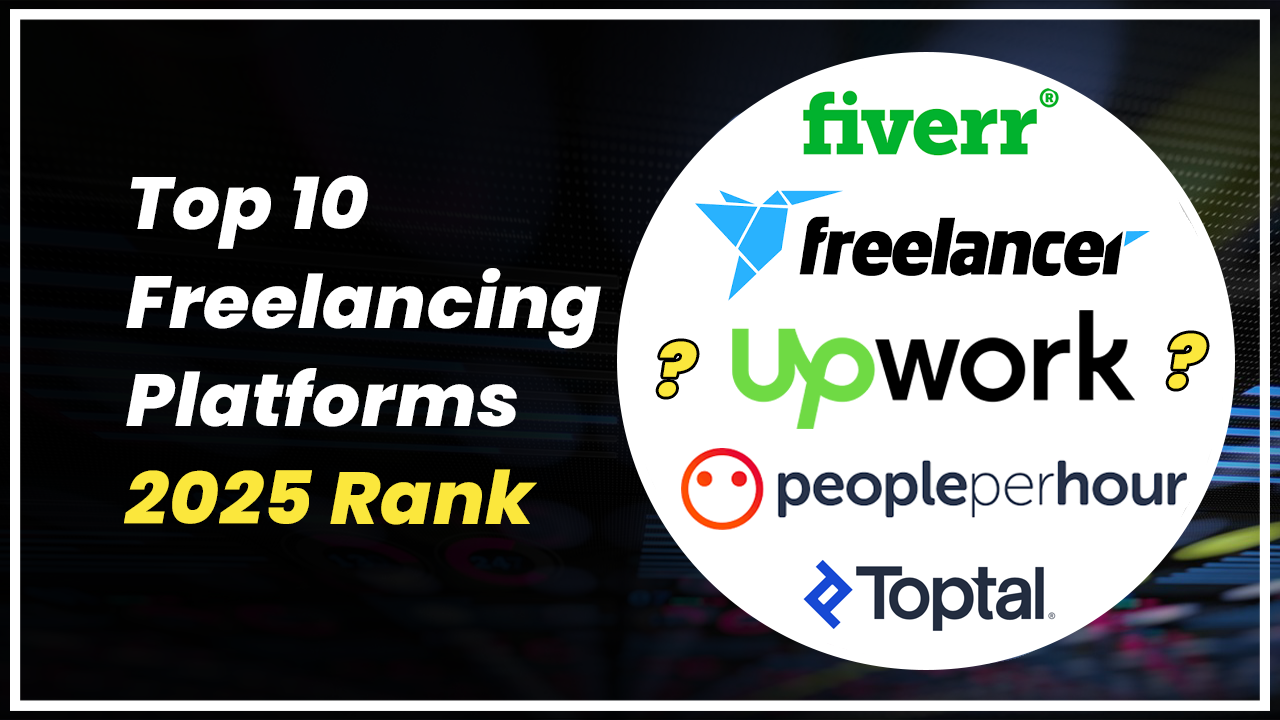
Hello, my fellow freelancers, so here’s the deal: back when I was starting in 2013, freelancing was viewed as something strange, but now it’s so popular that you don’t know where to start, so here is my top 10 freelancing platforms rank for 2025.. When I talked to friends and told them I’m a video creator, everybody thought I was doing video chat lol.
But since the last pandemic, things have turned into “normal”. Now, all of a sudden, everybody was forced to work from home, and freelancing was gaining more and more popularity.
In the past decade, millions of people decided to become freelancers and work online, choosing freedom over fixed office hours.
As of 2025, estimates suggest there are around 1.57 billion freelancers worldwide — that’s roughly 47% of the global workforce. 🌍
Here’s a quick breakdown by region (based on data from the World Bank, Statista, and Fiverr’s 2024 report):
| Region | Estimated Freelancers (2025) | Key Insight |
|---|---|---|
| 🌎 Asia | ~900 million | The largest freelancing region, driven by India, Pakistan, and the Philippines. |
| 🌍 Europe | ~120 million | Growing fast, especially in Eastern Europe and the UK. |
| 🌍 North America | ~70 million | The U.S. alone has over 65 million freelancers (almost 40% of the workforce). |
| 🌍 South America | ~100 million | Brazil and Argentina lead in tech and creative freelancing. |
| 🌍 Africa | ~200 million | Nigeria, Kenya, and South Africa are emerging freelance hubs. |
| 🌏 Oceania | ~10 million | Australia and New Zealand have a strong remote work culture. |
With so many people working from home, the demand of freelancing platforms incresed too. But with so many freelancing platforms out there, where should you start?
Here Is My No-BS Picks For Top 10 Freelancing Platforms
1. Upwork
Let’s start my top 10 freelancing platforms with the undisputed king of freelancing platforms. I’m a top-rated Plus Freelancer for over 8 years, almost as long as the platform has existed. For reference, you can check out my upwork profile here.
Best for: Experienced freelancers looking for long-term clients.
Pros:
- A lot of Big Clients, I’m talking contractors that work for Governments for the biggest states in the world (I worked for 2 of them, one contractor was for A,U and another one which is confidential)
- Massive client base across almost every industry.
- Option for hourly or fixed-price contracts.
- Built-in time tracker and secure payments.
Basically, the cash is here, but the competition is very high, and you need to become at least an intermediate-tier freelancer to have a good chance.
Cons:
As I’ve mentioned above, it’s tough out here:
- High competition for beginners.
- Up to 10% service fee.
- Takes time to build a strong profile and visibility.
💡 Verdict: Excellent if you’re serious about freelancing as a career — worth the effort once you establish trust.
2. Fiverr
This is one of the best platforms to get cheap services (I order the voice over for my videos from here). Also a lot of competition, but overall good for beginners too.
Best for: Creative freelancers selling specific services (“gigs”).
Pros:
- Simple to start — no client proposals, just post gigs.
- Great for design, writing, and video editing.
- You set your own packages and upsells.
Cons:
- Price competition can be brutal at the start.
- Fiverr takes 20% of your earnings.
- Some buyers expect fast delivery for low pay.
💡 Verdict: Perfect for building a portfolio and passive client flow once your gigs rank.
3. Toptal
I’ve been honest with you: I never tasted this platform, just looked around for a bit to inspect it, and from what I’ve heard from others, it’s mostly a niche freelancing platform.
Best for: Top 3% of tech, design, and finance freelancers.
Pros:
- High-end clients (Fortune 500, funded startups).
- No race to the bottom on pricing.
- Projects are often long-term and well-paid.
Cons:
- Rigorous vetting process — tough to get in.
- Not ideal for beginners.
💡 Verdict: Elite marketplace. If you’re highly skilled, this is where serious money lives.
4. Freelancer.com
I know about them from the very beginnings, where they were the top freelancing site along wit oDesk and VWorker (both bought by Upwork). The competition is not so scary, the money is ok tho, so overall a good 4th Place for the OG of the Freelancing platforms. In fact, it should be No. 3, in my top 10 freelancing platforms, just for the name! But you’ll see at Con’s why it’s not in the top 3.
Best for: All-rounders and beginners testing the waters.
Pros:
- Huge range of job categories.
- Regular contests for design and writing.
- Easy signup and bidding system.
Cons:
- High competition
- spammy job posts (that’s the reason I’ve left, a lot of bot spam fake job posts that drain your energy and hopes that you’ll get a client)
- Fees can stack up (project + withdrawal fees).
💡 Verdict: A good learning ground — just be selective with the jobs you apply for.
5. 99Designs
Next on my top 10 freelancing platforms comes 99designs. As the name states, it’s a nice platform to get freelancers specialized in the design field.
Best for: Designers, illustrators, and branding experts.
Pros:
- Design contests help you showcase your talent.
- Focused, creative community.
- Direct client projects are available once you rank up.
Cons:
- No guarantee you’ll win contests (time risk).
- Limited to design-related work.
💡 Verdict: A great place to grow if you’re visual-focused and love competition.
6. PeoplePerHour
I worked on this one as soon as it started. The approach changed a bit because it was kinda like Fiver in the beginning, offering freelancers the possibility to post their service as a classified ad, but now is just a project-based freelancing platform.
Best for: Freelancers offering hourly or project-based work in Europe.
Pros:
- Strong UK and EU client base.
- Easy interface with proposal and payment tools.
- The hourly “offers” feature makes selling fast.
Cons:
- Slower job flow compared to Upwork or Fiverr.
- Service fees can eat into smaller gigs.
- Mostly for UK/EU
💡 Verdict: Excellent for European freelancers or anyone looking for professional small-business clients.
7. Guru
Let’s move on to the next contestant in my top 10 freelancing platforms, which is a bit of a dilema, because Idk man, I just don’t like the name, but hey, you can’t be picky if you need a job, so for those of you who really need a new source of leads, this can be a great option.
Best for: Tech, writing, and admin freelancers.
Pros:
- Clean dashboard and contract management.
- Flexible payment options (milestone, hourly, recurring).
- Low service fees compared to others.
Cons:
- Smaller client base.
- The interface and user experience feel a bit outdated
- Again, a freelancing platform that is strong only for a few niches
💡 Verdict: Solid platform for long-term client relationships and repeat work.
8. LinkedIn Services Marketplace
Well, I couldn’t finish my top 10 freelancing platforms without including the OG of connecting people – Linkedin. I can’t say bad stuff about LinkedIn, no matter how much they charge for advertising or any other fees, because my first sale ever came from them, in 2013 on 25 December. I remember till this day, because it seems to be a miracle. I had no experience, my work was also in an infantile stage lol, I can’t even look at the first videos created, but hey, it was what it was, and back then whiteboard videos were something new and cool.
Best for: Professionals leveraging existing networks, you need to have a good profile with some reasonable connections in order to be taken into consideration and be hired.
Check out my own profile here.
Pros:
- Built-in credibility — clients see your full profile.
- Easy to attract leads organically.
- Great for consultants, marketers, and coaches.
Cons:
- No escrow or payment protection.
- Works best if you already have a personal brand.
- Kinda an old school selling vibe, like cold emailing
💡 Verdict: Amazing for freelancers who sell expertise, not just tasks, and you need to have some background, a strong profile, a portfolio, and a proposal that sells. Back then, I had a profile video especially made for LinkedIn hussling, so if you need one, I can do it for you here.
9. SimplyHired
Following up on the number 9 on my top 10 freelancing platforms SimplyHired. A solid tier 2 freelancing platform.
Best for: Finding freelance and remote jobs across industries.
Pros:
- Aggregates listings from multiple platforms.
- Great filters by category and experience.
- Easy to browse and apply.
Cons:
- Not a true marketplace — you apply externally.
- No built-in communication or payment system.
💡 Verdict: Excellent research tool to discover what’s in demand and where to pitch.
10. Contra
I’ve tried as soon as it started, not a big fan, kinda disappointed, but hey, the concept is nice, and maybe it will work for some freelancers that need an extra way to get exposure.
Also, you can’t apply to a job if you don’t spend $29 first, which is kinda meh for small freelancers who don’t have that much to begin with! I know it sounds hard to believe, but believe me, I was in that position too, and it sux to not be able to afford a few dollars to invest in yourself! That’s why every service on this website and course will be free!
Best for: Modern freelancers who want 0% commission.
Pros:
- No platform fees — you keep 100% of your income.
- Polished, portfolio-driven interface.
- Clients pay directly via Stripe.
Cons:
- Smaller audience (still growing).
- Requires self-promotion to get noticed.
💡 Verdict: It deserves to be on the last spot of my top 10 freelancing platforms just because it has only about 500 jobs in total, yes, in total! So, it can be kinda good for freelancers who want control and independence without platform restrictions, and also have a broad niche like graphic design in order to be sure you get some projects there…
Final Thoughts
Everything is good under the sun, and each one of these freelancing platforms may be the best fit for a particular freelancing skill, so in the end, it’s up to you to decide where to go from here.
My last opinion:
- Upwork and Fiverr are best for visibility and consistency.
- Toptal and Contra cater to high-end independence.
- 99Designs and PeoplePerHour focus on niche creativity.
Start with one platform, master it, then diversify — not all at once. Your goal isn’t to chase platforms; it’s to build a reputation so strong that clients follow you wherever you go. And building a reputation takes time, so I can’t see myself juggling more than 2-3 freelancing platforms, but if you think you can do it, then good luck!
Also, feel free to add your service, literally for free, on our website at the offers section.